The Questions That Shape Us: What UX cognitive walkthroughs reveal about human potential
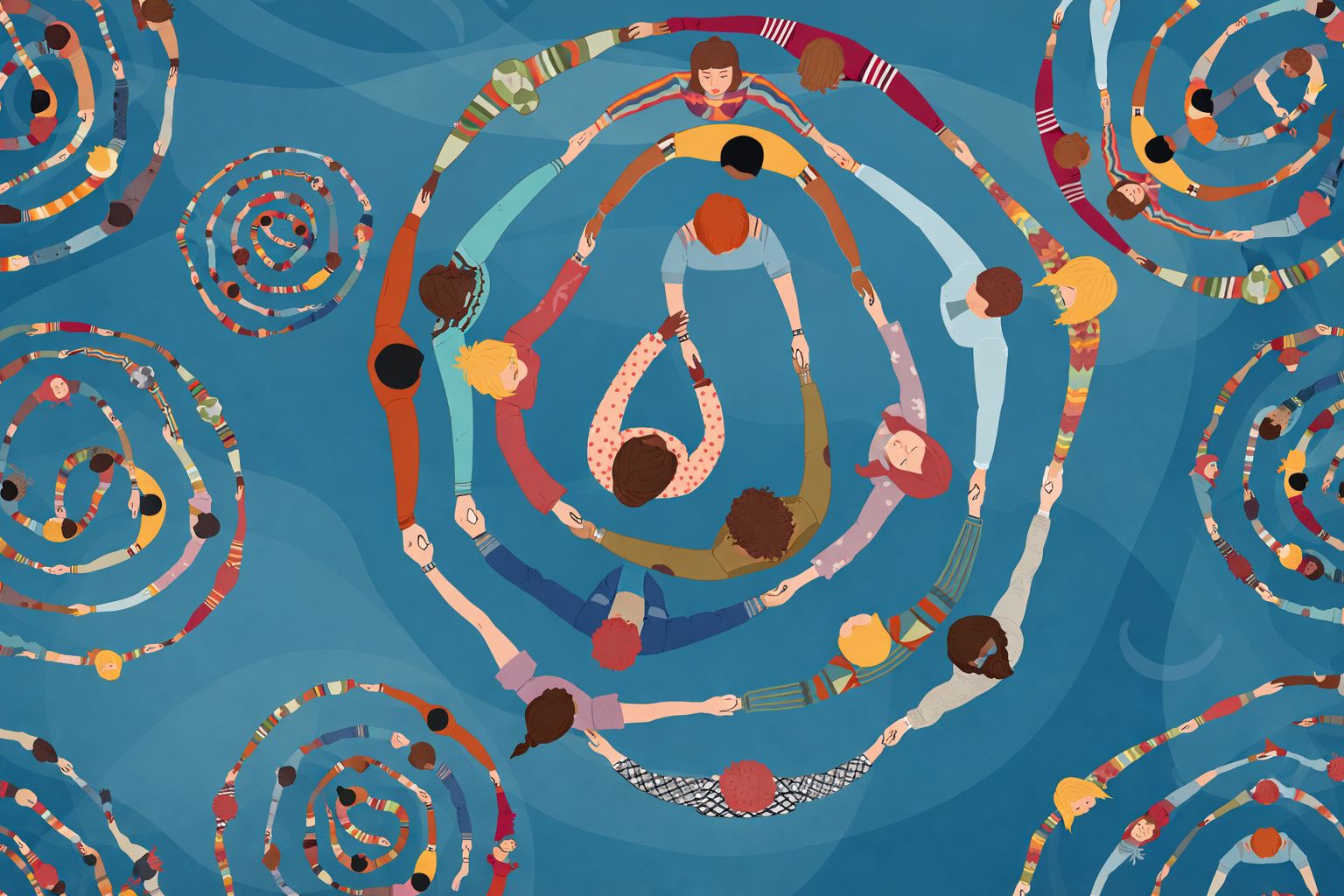
Image by: Jules Sherman + Adobe Photoshop AI
Today, two seemingly disparate inputs I consumed overlapped in a way that felt unexpectedly connected.
Earlier this morning, I listened to a conversation between Oprah Winfrey and Adam Grant about his book, Hidden Potential: The Science of Achieving Greater Things. Grant returned again and again to a central idea: people don’t fail to grow because they lack talent. They stall because the environments around them somehow inhibit learning, risk-taking, and momentum.
Later today, I was watching a lecture online for my human-computer-interaction and design graduate program on UX testing methods, specifically, cognitive walkthrough techniques. Our instructor, Dr. Blake DiCosola, shared the questions designers use to evaluate whether an interface supports user success. I realized I was hearing the same argument, expressed in different languages. Both are about systems, and how they serve or don’t serve people.
The Four Questions UX Designers Ask
A cognitive walkthrough evaluates whether a system supports a user step-by-step by asking four core questions:
Does the user want to achieve the outcome that a given action will have?
Will users see the control (button or menu) for the action?
Once users find the control, will they recognize that it will produce the outcome they want?
After the action is taken, will users understand the feedback and be able to continue?
Read literally, these are usability checks. Read metaphorically, they offer a precise explanation for why so many people struggle to express their full potential.
1. Wanting the Outcome
In UX, the first question checks alignment: if an action leads to an outcome the user doesn’t actually want, engagement stops immediately.
In life, misalignment is everywhere. People often pursue outcomes suggested to them by parents, institutions, or culture rather than ones they’ve consciously chosen. Grant argues that motivation erodes when goals are externally imposed. Potential doesn’t disappear, it’s just never activated. If the outcome isn’t meaningful for someone their effort feels hollow.
2. Seeing the Option to Act
Designers know that invisible controls might as well not exist. If users can’t see how to act, they can’t move forward.
The same is true for opportunity. Many people don’t lack ability, they lack visibility of pathways. Systems and communities may be difficult to penetrate, governed by unspoken cultural rules, or reliant on mentors or contacts that are difficult to access. In Hidden Potential, Adam Grant argues that opportunity isn’t just about access, but about legibility. Access alone does not create opportunity. Without clear, visible pathways, inequality continues, because people cannot pursue what they cannot see.
3. Trusting the Path
Even when an option is visible, users hesitate if they do not recognize that it will produce the outcome they want. In UX, this reflects a problem of affordance and mapping; when users cannot clearly connect an action with its expected outcome.
In life experience terms, this is the moment when people ask themselves: Will this effort actually lead somewhere? Grant’s work shows that persistence collapses when the link between action and outcome is unclear or inconsistent. He also argues that confidence grows not from fixating on the end result, but from trusting the learning process itself. When people focus only on the distant outcome, uncertainty feels paralyzing. When they focus on whether the next step builds skill, understanding, or momentum, action becomes possible.
When we are unclear about how our effort turns into progress, disengagement becomes a rational response. Belief in the path and in the learning it produces matters as much as belief in oneself.
4. Making Sense of Feedback
The final question is about feedback, and it’s often where both systems and people fail. After an action, does the system clearly communicate what happened and what to do next? Professor DiCosola explained that providing users with a clear checklist of requirements helps reduce anxiety by making it obvious what is needed to complete a task.
Grant says that growth requires feedback that treats mistakes as information, not shame. When feedback is too critical, or emotionally overwhelming, people stop experimenting and interpret the feedback as failure. This experience may lead to retreating long before their potential is reached. Progress depends on constructive, supportive feedback that makes continuation possible.
Designing for Potential
Reflecting on these two inputs today, I recognize that people are still responsible for effort, persistence, and choice. At the same time, the systems around them play a powerful role in shaping whether those efforts are supported or undermined. When systems fail to support an individual’s goals, make options visible, connect effort and failure to learning, or provide constructive feedback, even motivated people can stagnate. If we want people to flourish, we need environments that support what matters to them, inspire action on those values, make it clear that learning itself is progress, and ensure emotional safety as people grow.
UX designers use cognitive walkthroughs to improve products. Adam Grant invites us to apply the same rigor to schools, workplaces, and people’s lives, because potential does not need to be “unlocked,” it needs to be designed into the systems that surround us.
References
Grant A. Hidden Potential: The Science of Achieving Greater Things. New York, NY: Viking; 2023.
What Is Your Full Potential — with Adam Grant and Oprah
https://www.youtube.com/watch?v=kcwY_TlHthI
Informatics 283 - Week 2 - Cognitive Walkthrough Lecture, UCI MHCID, 2026 Blake DiCosola, Ph.D.